
Clinical Research Career Guide India 2026
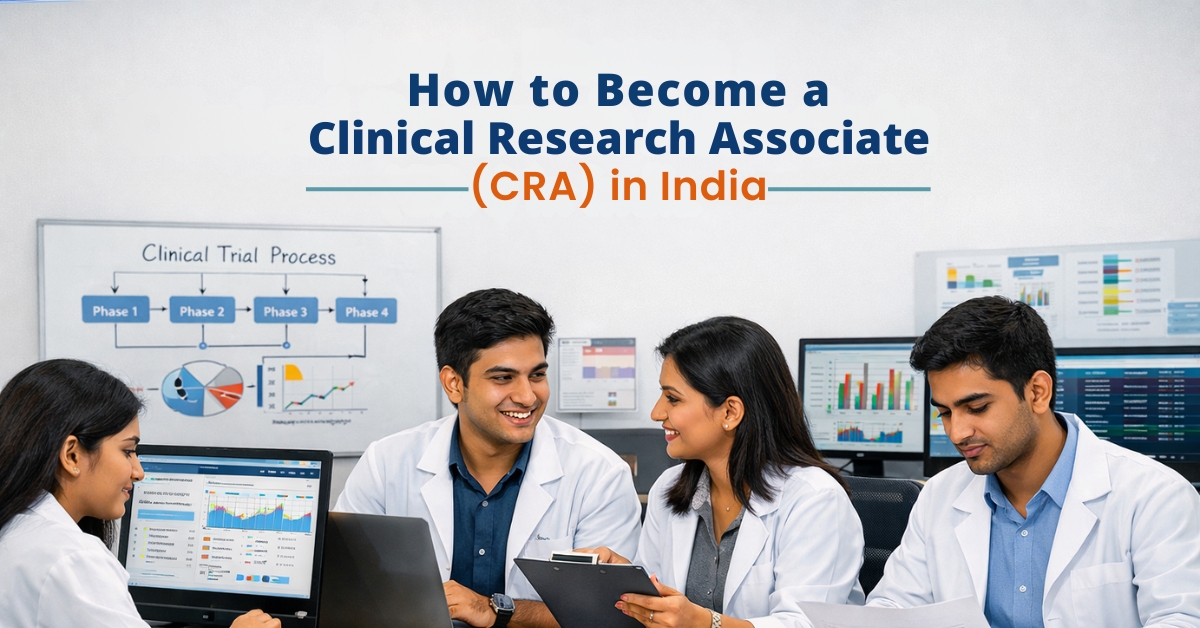
How to Become a Clinical Research Associate (CRA) in India in 2026:
The Complete Step-by-Step Guide
| Quick Summary: This guide explains exactly how to become a Clinical Research Associate (CRA) in India in 2026. You will learn what CRAs do on a daily basis, what qualifications you need, which training programmes are government-accredited, what salary to expect at each career stage, and how BCRI’s CRA Certification programme can fast-track your entry into the field. Suitable for fresh life sciences graduates and professionals looking to move into clinical trials. |
A Clinical Research Associate — or CRA — is one of the most visible and well-paid roles in the clinical research industry. CRAs travel to hospitals and clinics (called investigator sites), check that clinical trials are being run correctly, verify patient data, and report back to the sponsor or CRO.
If you are a B.Pharm or M.Sc. graduate thinking about a career in clinical research, the CRA role is probably the one you have heard about most. And for good reason: it pays well, offers variety, and is in constant demand.
But how do you actually get there? This guide walks you through every step — honestly, with realistic timelines and expectations.
What Does a Clinical Research Associate Actually Do?
A CRA’s primary job is site monitoring. This means visiting investigator sites (hospitals, clinics, or research centres) where a clinical trial is running and checking that everything is being done according to the protocol, ICH-GCP guidelines, and applicable regulations.
Day-to-day responsibilities of a CRA:
- Conducting Site Initiation Visits (SIVs), Routine Monitoring Visits (RMVs), and Close-Out Visits (COVs)
- Verifying source data against Case Report Forms (CRF) — a process called Source Data Verification (SDV)
- Checking regulatory binder completeness (Investigator Site File)
- Training site staff on the protocol
- Resolving data queries
- Writing monitoring visit reports
- Communicating with the Principal Investigator and site coordinator
- Escalating protocol deviations to the sponsor
Types of CRAs:
- In-house CRA / Central Monitor: Works from office, reviews data remotely
- Field CRA / Travelling CRA: Visits sites regularly (50–80% travel)
- Site Management Associate (SMA): Junior version, typically site-based
- Regional CRA Manager: Manages a team of CRAs, senior role
CRA Eligibility — Who Can Apply?
Minimum educational qualifications:
- Pharm / M.Pharm
- Sc. or M.Sc. in Life Sciences, Biotechnology, Microbiology, Pharmacology, or related fields
- MBBS, BDS, or nursing graduates (highly preferred for therapeutic-area-specific CRA roles)
Most companies prefer:
- ICH-GCP certification (mandatory at most CROs)
- 6 months to 1 year of practical clinical research training
- Good written and verbal English communication skills
- Willingness to travel (for field CRA roles)
- Proficiency with EDC systems (electronic data capture)
Fresh graduates CAN become CRAs. However, you will almost always need a clinical research training programme to bridge the gap between your degree and job readiness. Pure academic knowledge is not enough — employers want to know you understand SDV, ISF, ICH-GCP E6(R2), and site conduct.
Step-by-Step Guide — How to Become a CRA in India
Step 1: Complete Your Life Sciences Degree
Your B.Pharm, M.Sc., or MBBS is the minimum foundation. During your degree, focus on pharmacology, clinical medicine basics, and any research methodology subjects. If you are still in your final year, start researching clinical research training now.
Step 2: Understand the ICH-GCP Guidelines
Every CRA must know ICH-GCP E6(R2) inside out. This is the international standard for clinical trial conduct. Download the guideline from ich.org and familiarise yourself with key concepts: Informed Consent, Protocol Deviations, Investigator Responsibilities, and Sponsor Obligations. Your training programme should cover this in depth.
Step 3: Enrol in a Government-Accredited CRA Training Programme
This is where most fresh graduates underestimate the importance of training quality. Many institutes offer “clinical research awareness” courses that will not make you job-ready. Look for programmes that:
- Are accredited by NSDC, NCVET, or LSSSDC (government recognition)
- Include hands-on training with EDC tools
- Teach ICH-GCP and CDSCO regulations in depth
- Provide real monitoring visit simulations
- Offer post-training placement support
BCRI’s CRA Certification Programme (3 months) is accredited by LSSSDC and NSDC. It covers SDV, site monitoring, regulatory compliance, EDC systems, and communication skills. BCRI also offers the PGDCR (6 months) for students who want a broader foundation.
Step 4: Build Supporting Skills
While training, invest time in:
- Learning Microsoft Office thoroughly (Excel, Word, PowerPoint for monitoring reports)
- Improving your professional email writing
- Understanding CDSCO New Drugs and Clinical Trials Rules 2019
- Studying real clinical trial protocols (several are publicly available on ctri.nic.in)
Step 5: Target Your First Job Strategically
Fresh CRA jobs are typically titled:
- Site Management Associate (SMA)
- Clinical Research Coordinator (CRC)
- Junior CRA / CRA Trainee
- Clinical Operations Associate
Do not apply only to IQVIA and Parexel. Smaller CROs like Veeda Clinical Research (Ahmedabad), Siro Clinpharm (Mumbai), and Lambda Therapeutic Research (Ahmedabad) actively recruit freshers and give them more monitoring responsibility early.
Step 6: Prepare for the Interview
CRA interviews typically test:
- ICH-GCP knowledge (define SDV, protocol deviation, serious adverse event)
- Scenario questions (What would you do if the site coordinator hasn’t completed the ISF?)
- Therapeutic area basics (oncology, cardiology, CNS — depending on the role)
- Communication and travel willingness
BCRI’s placement team conducts mock CRA interviews before students graduate, which significantly improves offer rates.
CRA Salary in India — What to Expect in 2026
| Experience Level | Job Title | Salary Range | Key Skills Required |
|---|---|---|---|
| 0–1 year (Fresher) | Junior CRA / SMA | ₹4.0–5.5 LPA | ICH-GCP, EDC basics, SDV |
| 1–3 years | CRA I / CRA II | ₹6.0–9.0 LPA | Full SDV, visit reports, protocol adherence |
| 3–5 years | Senior CRA | ₹9.0–14.0 LPA | Multi-site management, protocol deviation handling |
| 5–8 years | Lead CRA / Regional Manager | ₹14.0–22.0 LPA | Team management, sponsor liaison |
| 8+ years | Clinical Project Manager | ₹20.0–35.0 LPA | Full trial management, budget, timelines |
Source: BCRI placement records, industry salary surveys 2025. Ranges vary by city, therapeutic area, and company type.
Top Companies Hiring CRAs in India (2026)
Global CROs with major India operations:
- IQVIA (formerly Quintiles) — Bangalore, Hyderabad, Mumbai
- Parexel — Hyderabad, Bangalore
- ICON plc — Bangalore, Hyderabad
- PPD (now part of Thermo Fisher) — Hyderabad
- Covance (LabCorp) — Hyderabad
Indian CROs (excellent for freshers):
- Veeda Clinical Research — Ahmedabad, Bangalore
- Siro Clinpharm — Mumbai, Hyderabad
- Lambda Therapeutic Research — Ahmedabad
- Manipal Clinigene — Bangalore
- Clininvent — Mumbai
Pharma companies with in-house clinical teams:
Sun Pharma, Dr. Reddy’s, Cipla, Biocon, Lupin — all have clinical operations teams
CRA vs Other Clinical Research Roles — Quick Comparison
| Factor | CRA | CDM | Pharmacovigilance |
| Work Style | Travel-heavy, site-based | Office-based, data-focused | Office-based, medical review |
| Travel Required | Yes (50–80% for field CRA) | Rarely | No |
| Key Tools | EDC systems, monitoring tools | Oracle Clinical, Medidata Rave | Argus Safety, AERS |
| Communication | High (site staff, investigators) | Moderate | Moderate |
| Fresher Starting Salary | ₹4.0–5.5 LPA | ₹3.5–5.0 LPA | ₹3.0–4.5 LPA |
| Growth Ceiling | Very high (CPM, Director) | High (Head of Data Management) | High (Global PV Head) |
| Best Suited For | People-oriented, detail-oriented travellers | Analytical, tech-inclined | Medical knowledge focus |
Student Success Story — Karthik Reddy
Karthik Reddy completed his B.Pharm from Osmania University (Hyderabad) in 2021. He joined BCRI’s CRA Certification Programme (Batch: January 2022) after attending a free career counselling session.
“I was confused between CDM and CRA. After speaking with BCRI’s faculty, I realised my personality — I like field work and talking to doctors — made CRA the right fit. The mock site visit simulation during training was genuinely useful for interviews.”Clinical Research Career Guide India 2026
Karthik was placed as a Site Management Associate at Veeda Clinical Research within 6 weeks of completing the programme. His starting salary was ₹4.5 LPA. He has since moved to IQVIA as a CRA II, earning ₹8.2 LPA.
BCRI Batch: January 2022 | Current Role: CRA II, IQVIA Bangalore
BCRI’s CRA Certification Programme — Key Highlights
Duration: 1.5 months + Internship (3 Months to 6 Months)
Government Accreditation: LSSSDC and NSDC accredited (dual government recognition)
Format: Offline (HSR Layout, Bangalore), Live Online, Weekend batch for working professionals
Curriculum Covers: ICH-GCP E6(R2), CDSCO regulations, SDV, monitoring visit procedures, EDC system training, ISF management, protocol deviation handling, visit report writing
Hands-on Training: Real EDC tool simulations, mock site visits, case study workshops
LMS Access: Recorded class recordings available for revision
Placement Support: CV building, interview prep, recruiter connections
International Option: Available for students outside India (USD pricing)
For current fees and batch dates, visit bcri.in/cra-certification or contact the admissions team.
FAQ — How to Become a CRA in India
Q1: Can a fresher become a CRA without any experience?
Yes, freshers can absolutely become CRAs — but almost always after completing a dedicated clinical research training programme. Pure academic qualifications are typically not sufficient. Employers expect ICH-GCP knowledge, SDV understanding, and some exposure to EDC systems. A 3-month CRA certification or 6-month PGDCR from an accredited institute significantly improves your chances. BCRI’s 87% placement rate (2025 data) reflects how effective focused training can be for freshers.
Q2: Is travel mandatory for all CRA jobs?
No. While field CRA roles involve significant travel (50–80%), there are in-house CRA and remote monitoring roles that are office-based. As a fresher, you will typically start in a more office-based capacity (Site Management Associate or in-house CRA) before moving to full field monitoring. Remote monitoring has grown significantly since 2020 and is now a standard part of many CRA roles.
Q3: How important is ICH-GCP for getting a CRA job?
ICH-GCP is essential. Almost every CRO in India requires ICH-GCP E6(R2) certification before or during hiring. It is the international standard governing how clinical trials are conducted. Your training programme should include ICH-GCP in detail. BCRI’s CRA programme includes comprehensive ICH-GCP training and assessment.
Q4: What is the difference between a CRA and a CRC?
A CRA (Clinical Research Associate) works for the Sponsor or CRO and monitors sites from the outside. A CRC (Clinical Research Coordinator) works at the investigator site — they recruit patients, collect data, and manage day-to-day trial operations at the hospital or clinic. CRCs are typically employed by the site (hospital) itself. Both are valid entry points into clinical research, but CRA roles are generally higher-paying and have a clearer upward career path.
Q5: What is CDSCO and why does it matter for CRAs?
CDSCO (Central Drugs Standard Control Organisation) is India’s national regulatory body for drugs, cosmetics, and medical devices — similar to the FDA in the USA. As a CRA working on trials in India, you need to understand CDSCO’s New Drugs and Clinical Trials Rules 2019, which govern how clinical trials must be conducted, reported, and approved in India. Your training should cover both ICH-GCP (global) and CDSCO (India-specific) requirements.
Q6: How long does it take to get a CRA job after training?
At BCRI, the average time from training completion to first job offer is around 6–10 weeks for candidates who actively engage with the placement process. BCRI’s 2025 data shows 87% placement within 90 days. Individual results vary based on interview preparation, flexibility in location, and how actively you apply.
Q7: What are the CRA interview questions I should prepare for?
Common CRA interview questions include: Define GCP and explain its importance; What is Source Data Verification (SDV)?; What is an Investigator Site File (ISF)?; What would you do if you discover a major protocol deviation at a site?; Describe the types of monitoring visits; What is an Adverse Event vs a Serious Adverse Event?; How would you handle a difficult site coordinator? BCRI’s placement team prepares students for these questions through mock interview sessions.
Q8: Is clinical research a stable career in India?
Yes. Clinical research is one of the most recession-resilient sectors in life sciences. Drug development does not stop — even during economic downturns, pharma companies and CROs continue running trials. India’s clinical trials market has been growing consistently at 10–14% per year. The demand for experienced CRAs and CDMs consistently outpaces supply.
Q9: Can I work as a CRA outside India with Indian training?
Indian clinical research professionals regularly get placed in the US, Europe, and the Middle East, especially if they have strong ICH-GCP credentials and experience on international trials. BCRI also offers international-format programmes for students targeting global careers. That said, starting your career in India with an Indian CRO or global CRO’s India office is the most practical first step.
Q10: What are the BCRI course fees and batch start dates?
BCRI does not publish fees publicly as they may vary by batch, format, and any current offers. Please contact the admissions team directly at bcri.in or call/WhatsApp them for current pricing and upcoming batch schedules. BCRI offers both offline (Bangalore) and live online formats, with weekend batches for working professionals.
Ready to Become a CRA?
| A clinical research career offers intellectual challenge, good pay, and the satisfaction of contributing to drug development that helps real patients. The CRA role specifically offers variety — no two sites, no two studies, and no two days are exactly the same. If you are ready to take the next step, BCRI offers a free career counselling session where an experienced industry professional helps you assess your fit for the CRA role and guides you on the best training path. Call / WhatsApp: 918792590942 Website: bcri.in/cra-certification Centre: HSR Layout, Bangalore Online classes: Available pan-India Also explore: PGDCR Programme → bcri.in/pgdcr (covers CRA + CDM + PV + CRA/CRC) CDM Course → bcri.in/cdm Batch Schedules → bcri.in/batches |
.tv-responsive-table{
overflow-x:auto;
-webkit-overflow-scrolling: touch;
}
.tv-responsive-table table{
width:100%;
border-collapse:collapse;
min-width:650px;
font-size:15px;
}
.tv-responsive-table th,
.tv-responsive-table td{
padding:12px 14px;
border:1px solid #e5e5e5;
text-align:left;
}
.tv-responsive-table th{
background:#1A237E;
color:#fff;
font-weight:600;
}
.tv-responsive-table tr:nth-child(even){
background:#f9f9f9;
}
/* Mobile optimization */
@media (max-width:768px){
.tv-responsive-table table{
font-size:14px;
}
.tv-responsive-table th,
.tv-responsive-table td{
padding:10px;
}
}